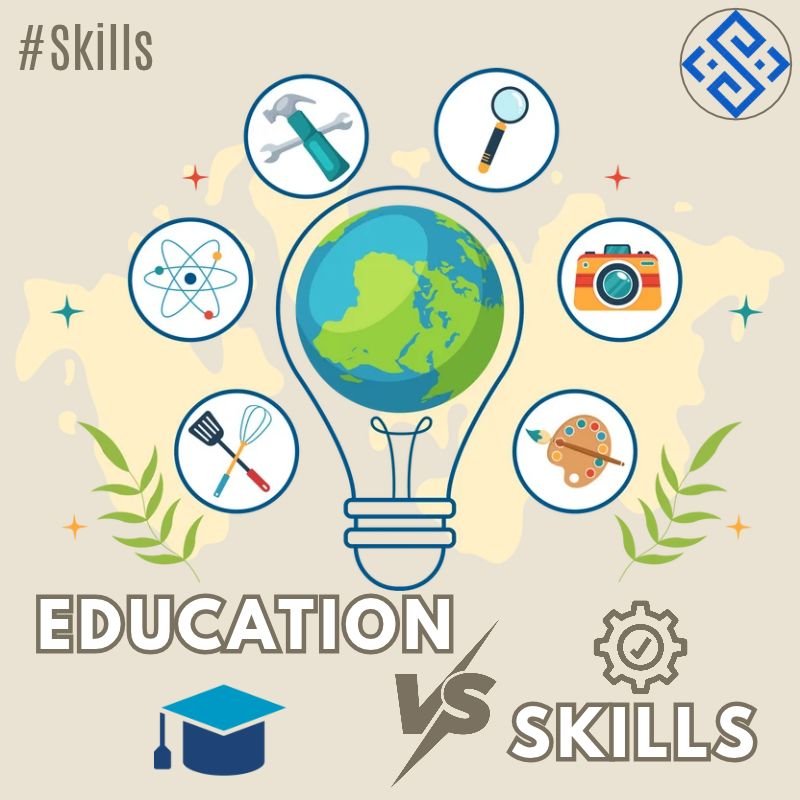
In today’s rapidly changing world, the debate between conventional education and acquiring practical skills has become increasingly important. While traditional education provides a strong foundation of knowledge, practical skills prepare individuals to face real-world challenges. Both are valuable, but understanding their differences is essential for personal and professional success.
Conventional Education: Building a Foundation
Conventional education refers to the formal learning system in schools, colleges, and universities. It provides theoretical knowledge, academic qualifications, and a structured understanding of different subjects. Degrees and certificates are often necessary for careers such as medicine, engineering, teaching, and law.
Traditional education also develops critical thinking, discipline, communication, and problem-solving abilities. However, one major limitation is that some educational institutions focus more on examinations, grades, and memorization than on practical experience. As a result, graduates may possess academic qualifications but struggle to meet the actual demands of the workplace.
Acquiring Skills: Preparing for Real Life
Skill acquisition involves learning practical abilities that can be applied directly to real-world situations. These include technical skills, computer programming, digital marketing, graphic design, communication, entrepreneurship, and problem-solving.
Unlike conventional education, acquiring skills often emphasizes hands-on experience, continuous practice, and measurable results. For example, a person who learns web development can create websites and potentially earn money without waiting years to complete a degree. Similarly, skilled electricians, mechanics, and technicians can establish successful careers through professional training and experience.
In the modern job market, employers increasingly value candidates who can demonstrate their abilities and deliver results. The internet has also made skill development more accessible through online courses, tutorials, and professional platforms.
Finding the Right Balance
Although practical skills are essential, they should not be considered a complete replacement for formal education. Academic knowledge provides the foundation upon which specialized skills can be developed. Similarly, practical experience makes theoretical knowledge more meaningful and useful.
The ideal approach is to combine education with skill development. Students should pursue academic qualifications while gaining hands-on experience through internships, projects, vocational training, and online learning.
Conclusion
Conventional education opens doors, while practical skills help individuals make the most of those opportunities. In a competitive world, success depends not only on what a person knows but also on what they can do with that knowledge. Therefore, the most effective path to success is to educate the mind, develop practical abilities, and remain willing to learn throughout life.